When Art and Architecture Enter into Dialogue

Icons, emotions, inspiration: the exhibition “The Art of Johnny Depp” brings contemporary art to the historic setting of Benrath Palace in Düsseldorf.
Johnny Depp
Johnny Depp, born in 1963, is one of the most famous and versatile actors of his generation. He first gained recognition through the TV series 21 Jump Street and later became known for his extraordinary roles, most notably as Captain Jack Sparrow in the Pirates of the Caribbean film series. In addition to his acting career, Depp is also a musician and a member of the rock band Hollywood Vampires.
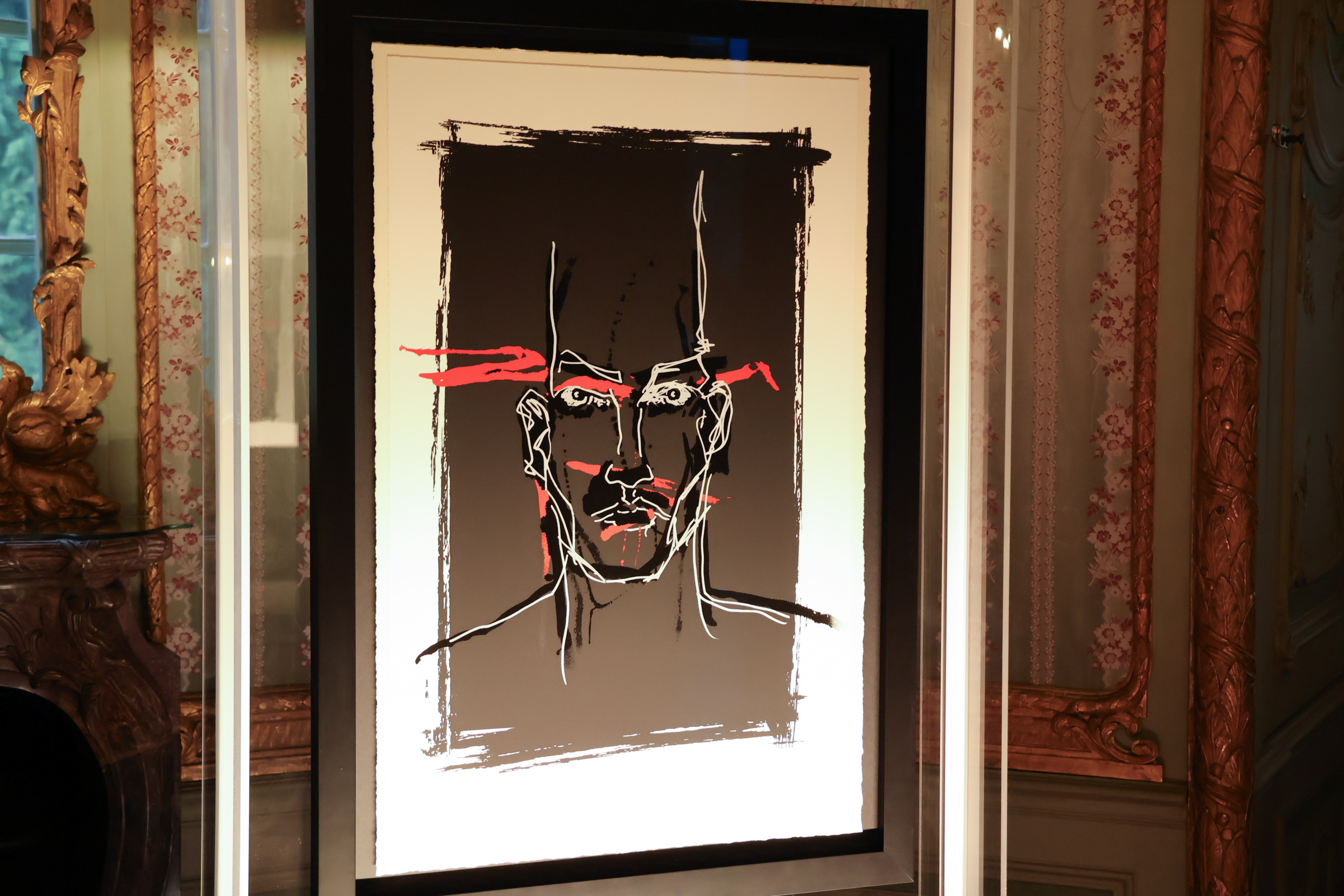
Johnny Depp is internationally known primarily as an actor. However, he discovered his passion for visual art long before his film career. His works combine pop culture, iconography and personal expression. Detailed motifs, intense colours and striking portraits define his distinctive visual language. The challenge was to present these artworks in a listed historic setting without compromising the unique impact of the palace interiors.
Art needs space – and so does historic architecture
Benrath Palace is more than an exhibition venue. Its sightlines, ornaments and generous spatial character are integral to the visitor experience. Conventional display walls would have limited these qualities: they interrupt visual connections, reshape the rooms and can quickly reduce historic architecture to a mere backdrop. At the same time, Johnny Depp’s artworks needed a distinctive, high-quality setting of their own. For curator Marcus Schäfer and his team, this raised a central question: how can art and architecture be presented as a unified experience? The answer was a transparent, freestanding display system made from PLEXIGLAS® XT.
A stage that almost disappears
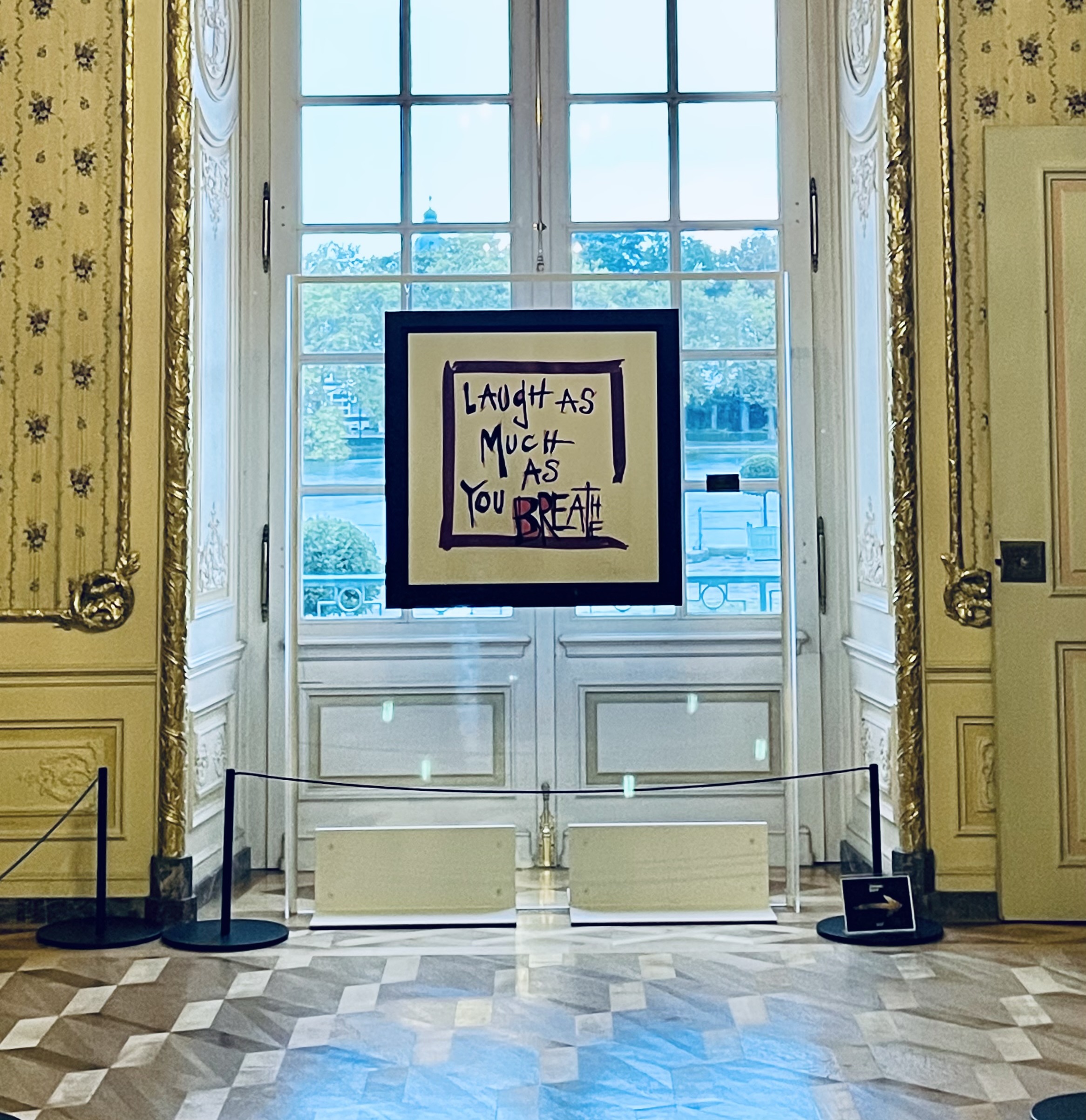
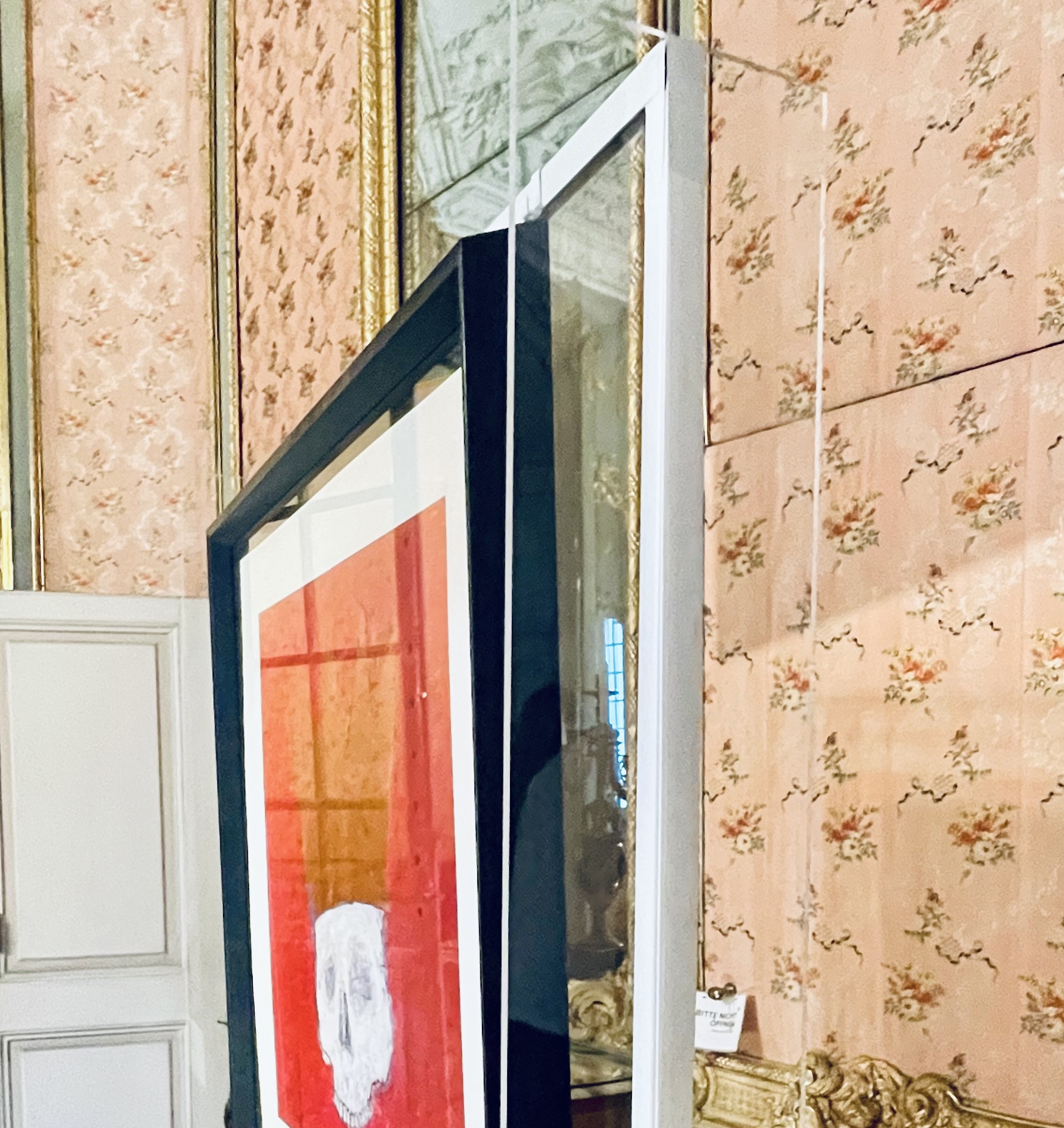
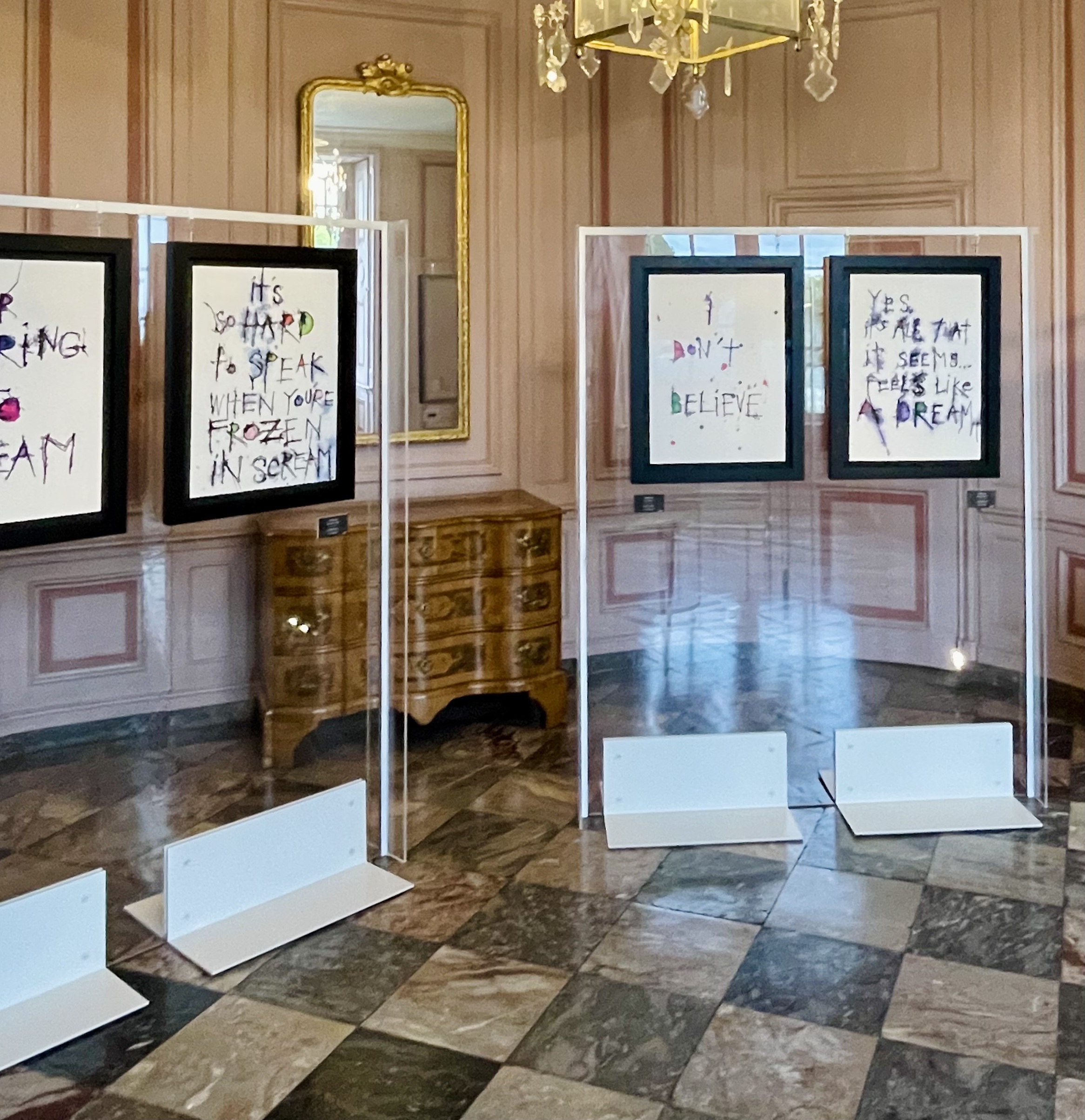
Instead of using opaque display walls, the team developed a minimalist presentation structure. It consists of a 10 mm sheet of PLEXIGLAS® XT Clear 0A000, secured in slim steel bases and framed by a delicate square metal profile.
The construction supports the artworks securely while remaining visually unobtrusive. The exhibits appear to stand freely in the room, while historic details, lighting effects and sightlines remain fully visible.
“Instead of conventional opaque display walls, we developed the idea of a transparent and minimalist presentation structure made from PLEXIGLAS® XT. The artworks are securely supported while the structure itself almost disappears visually.”Marcus Schäfer, curator of the exhibition
The solution is mobile, reusable and stable. It can be installed without interfering with the listed building fabric and adapted to different spaces and exhibition concepts.
PLEXIGLAS® XT creates creative freedom
PLEXIGLAS® XT was chosen for the display systems because it combines high transparency with low weight, strength and versatile processing options.
Its crystal-clear surface allows art, architecture and light to interact without obstruction. At the same time, its low weight supports easy transport as well as flexible installation and dismantling.
Individual formats, cut-outs and fixing solutions can be implemented with precision. This makes PLEXIGLAS® XT particularly suitable for bespoke exhibition concepts in which construction and design need to work together seamlessly.
Transparency as part of the experience
The presentation solution does more than change the way art is displayed. It creates a spatial experience.
Johnny Depp’s works remain clearly in focus, while the historic rooms of Benrath Palace and their architectural details remain fully accessible. Art and space enter into an open dialogue – light, contemporary and free from visual barriers.
In this way, PLEXIGLAS® XT becomes part of the installation itself: an almost invisible connection between contemporary art and historic architecture.
More about the exhibition
Information about “The Art of Johnny Depp” exhibition at Benrath Palace, including useful information for visitors.
Back to overview


